
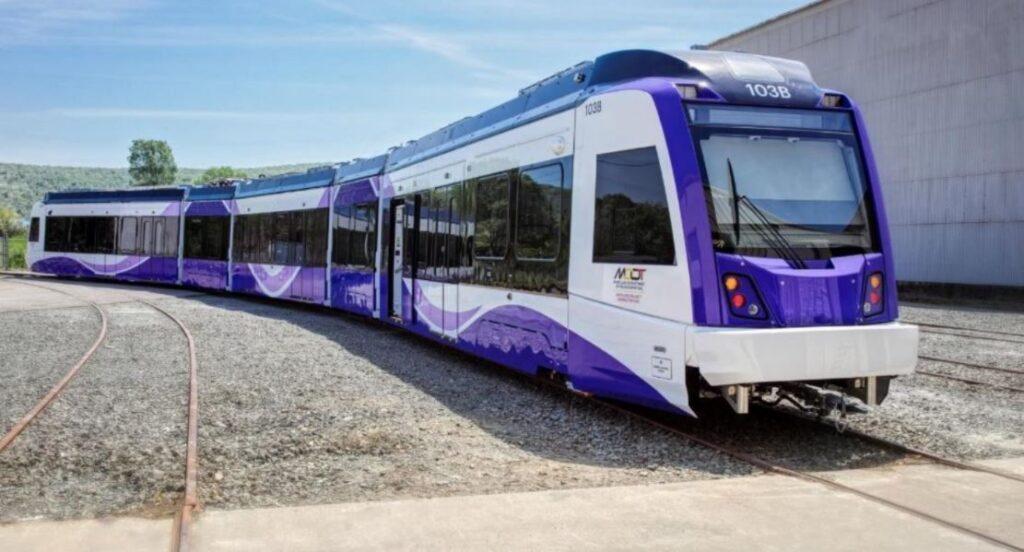
The Purple Line’s location on University of Maryland’s campus introduces unique safety risks for anyone working in or around the construction and operations corridor. In addition to standard jobsite hazards, proximity to an active light rail system and its overhead catenary wires creates elevated risks related to electrical exposure, equipment movement, and restricted right-of-way access.
UMD staff who plan, supervise, or perform work near the Purple Line must follow the university’s established safe work practices. If you or your team will be working within 25 feet of the nearest Purple Line rail, whether for maintenance, construction, inspections, landscaping, or other campus operations, you must complete the training and documentation described and linked below.
Before scheduling or beginning work in these areas, please ensure that all team members understand and follow the requirements.
- Training
The online Purple Line training module, “Managing Work Hazards Near the Purple Line – Stay Aware. Stay Safe" describes the important elements for preparing plans and conducting safe operations in defined zones.- Workday Training (For UMD employees Only)
- Work Authorization and Safety Plan
The Construction, Operations, Maintenance, and Utilities Work Authorization and Safe Work Plan for Areas Adjacent to the Purple Line details required precautions, roles and responsibilities, and approval steps for any activity conducted within the designated distance from the tracks. Included below are the plan, as well as the Track Allocation Permit, which is explained and demonstrated in the Workday Training and described in the Safe Work Plan:
Frequently Asked Questions
What training must you complete prior to working near the Purple Line?
Trainings in Workday.
What zones are involved with work around the Purple Line?
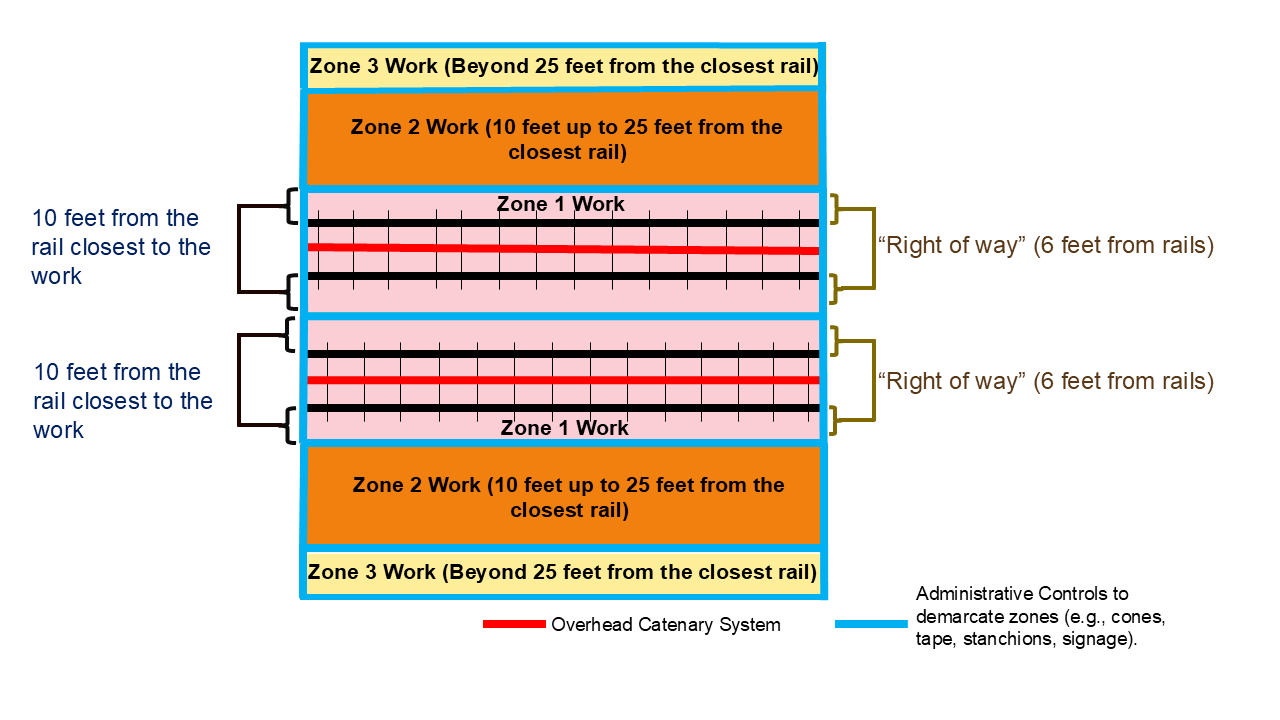
Work within which zones require a Site Specific Work Safety Plan to be submitted?
Work being conducted in Zones 1 and 2 require a Site Specific Work Safety Plan to be submitted, work in Zone 3 it is highly recommended to have a Site Specific Work Safety Plan completed. In some instances it may be required in Zone 3 as well.
How fast will the light rail vehicles travel through campus?
Light-rail vehicles will be limited to 15 mph through campus (same as all vehicles)
What is track allocation?
Track allocation is scheduled, authorized work being conducted on or near the rails and or the Overhead Catenary System (OCS).
Which work zones require a Track Allocation Permit for work near the Purple Line?
For work taking place in Zone 1 or in Zone 2 with the potential to enter Zone 1.
How far in advance must you submit a Track Allocation Permit request?
28 Days in advance.
What must you include in your Track Allocation Permit application?
The application must include a completed Site Specific Work Safety Plan, as well as a completed Track Allocation Permit Request Form.
Who do you submit a Track Allocation Permit request to?
Facilities Management submit to FM Safety & Emergency Management. All other campus entities submit to ESSR Occupational Safety & Health.

Topics to Consider for Your Site-Specific Work Safety Plan
Electrical Safety
Working near a light-rail system with overhead catenary wires means there is a high risk of electrical hazards. Training in electrical safety is essential to ensure workers understand how to recognize and avoid contact with live electrical systems, follow safe practices, use appropriate PPE, and coordinate with power shutdowns or isolation procedures.
Fall Protection
Working near the Purple Line may require activities like accessing equipment on ladders or maintaining infrastructure near catenary wires, which introduces a heightened risk of falls.
Hand Protection
Workers performing tasks near the Purple Line may encounter sharp edges, high-heat surfaces, electrical components and other hazards that could result in cuts, punctures, burns, or skin irritation.
Lockout/Tagout
Even when the overhead wires or rail electrification are normally live, maintenance or work near them often requires shutting down or isolating energy sources. Ensuring workers understand lockout/tagout procedures is critical in the context of catenary wires and rail systems.
Trenching and Shoring
Purple-line adjacent work may involve excavation to access utilities or other infrastructure, exposing workers to exposures such as cave-ins, falling loads, underground utilities, and other hazardous atmospheres.
Trenching and Shoring Fact Sheet Trenching and Shoring Fact Sheet
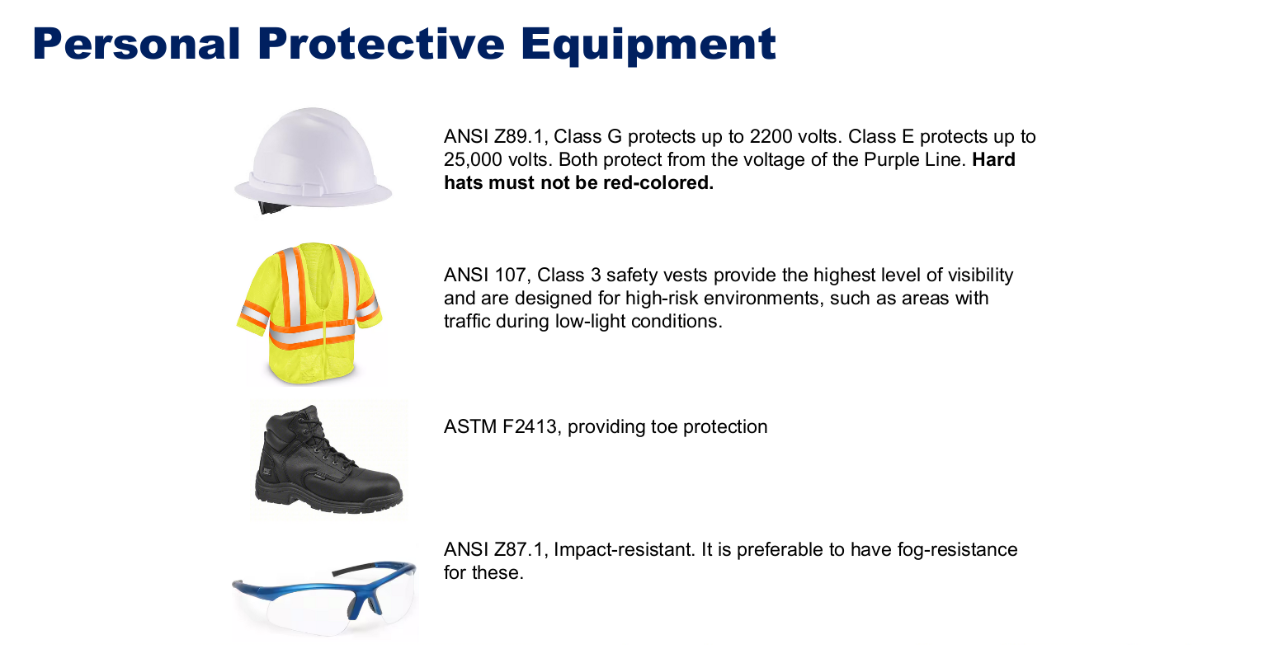
Personal Protective Equipment (PPE)
Tasks near the purple line may expose workers to hazards such as moving equipment, energized systems, sharp objects, noise, dust, chemicals, and so on. Training is especially important for workers to identify the type and limitations that PPE may provide. Certain types of PPE may be required based on the work taking place in the vicinity of the Purple Line.
Hearing Conservation
Routine light rail operations can generate noise levels high enough to damage hearing over time. Workers may be exposed to short, intense bursts of noise or sustained elevated sounds without realizing the risk.
Job Hazard Analysis (JHA)
A Job Hazard Analysis (JHA) is a step-by-step review of how a job is done, the hazards involved at each step, and the controls needed to perform the work safely. JHAs can help systematically identify and reduce hazards. Training on how to complete a JHA can be found here.
Additional Information Regarding the Purple Line on Campus
For more details and updates, please visit the Purple Line information page.