
Feature Article by Taylor Brinks and Vivian Maneval
Among the list of undergraduate student fees is one small but mighty line item: the Student Sustainability Fee. What makes it unique is not its comparatively small dollar amount, but its origin story. The student-led decision to implement this fee, made 15 years ago, sparked a grant program that placed sustainability directly in the hands of the campus community. Rather than remaining solely an institutional priority for the university, sustainability became something students, faculty, and staff could actively shape. The Sustainability Fund encouraged individuals to turn their own ideas into tangible projects, shifting campus sustainability to a shared effort.
A New Sustainability Fee Sparks Grassroots Innovation
In fall 2007, a group of undergraduate students, spearheaded by the Student Government Association (SGA), recognized a gap in how sustainability was taking shape on campus. By that point, UMD was the charter signatory of the American College and University Presidents' Climate Commitment, the Office of Sustainability was up and running, annual sustainability conferences were sparking climate conversations, and programs like small-scale recycling were expanding. Despite this early momentum, there were few financial incentives and opportunities for students, staff, and faculty to pursue independent projects that could further embed sustainability into day-to-day campus life.
In 2009, with support from 91% of the undergraduate student body, the SGA passed a resolution establishing the first-ever Student Sustainability Fee. Students soon determined that the fees’ revenue should fund a transparent, campus-wide grant program. The Sustainability Fund (the Fund) was officially launched in the fall of 2010, complete with a structured application process, a formal review process, and accountability mechanisms for projects implemented directly on campus. An undergraduate-majority Sustainability Fund Review Committee (SFRC) was created to ensure student leadership remained central to the grant. Today, the SFRC continues to evaluate proposals and forward recommendations to the University Sustainability Council for approval.
The Fund began accepting proposals in the 2010–2011 academic year. Early awards helped establish several campus gardens, including the Public Health Garden (now the Community Learning Garden), St. Mary’s Garden, and a rooftop garden atop the South Campus Dining Hall, alongside composting initiatives in the STAMP Student Union and other Student Affairs buildings. It also supported new student organizations, such as the Food Recovery Network, and expanded bicycle parking infrastructure. From the start, the Fund provided critical seed funding, enabling pilot projects that improved campus environmental performance and created learning opportunities for undergraduates. With financial backing in place, the campus community could pursue ideas ranging from small, niche initiatives to large-scale, cross-campus infrastructure improvements.
As awareness of the Fund grew, so did its impact. Faculty, staff, and students increasingly turned to the program to scale promising pilot efforts and expand educational initiatives. As Scott Lupin, Director of the Office of Sustainability, reflected, the Fund “provided a way for people and groups to collaborate, develop, and implement sustainability projects and become involved in this campus-wide effort. It has supported a lot of projects and ideas that never would have come to pass without support from the Fund.”
Rising interest led to incremental increases to the Student Sustainability Fee. As of the 2025–2026 academic year, the fee stands at $30 per year for full-time undergraduate students and continues to directly finance Sustainability Fund grants. It also supports the Sustainability Mini-Grant program, administered separately by the SGA Sustainability Committee, which provides awards of $2,000 for smaller-scale initiatives.
$5M+ awarded to over 200 projects since the Fund began
$800K available in funding each year
Transforming Campus and the Student Experience
Two projects that exemplify both campus implementation and broad institutional impact are Terp Farm and the Campus Forest Carbon Project. Launched with substantial Sustainability Fund grants in the 2010s, both initiatives remain active and continue to evolve today. Each has meaningfully shaped campus operations— Terp Farm through local food production and education, and the Campus Forest Carbon Project by advancing carbon accounting in support of the university’s climate goals. Neither project would have reached its current scale or longevity without the Sustainability Fund’s contribution, which provided the resources to hire and empower students, amplifying both impact and education.
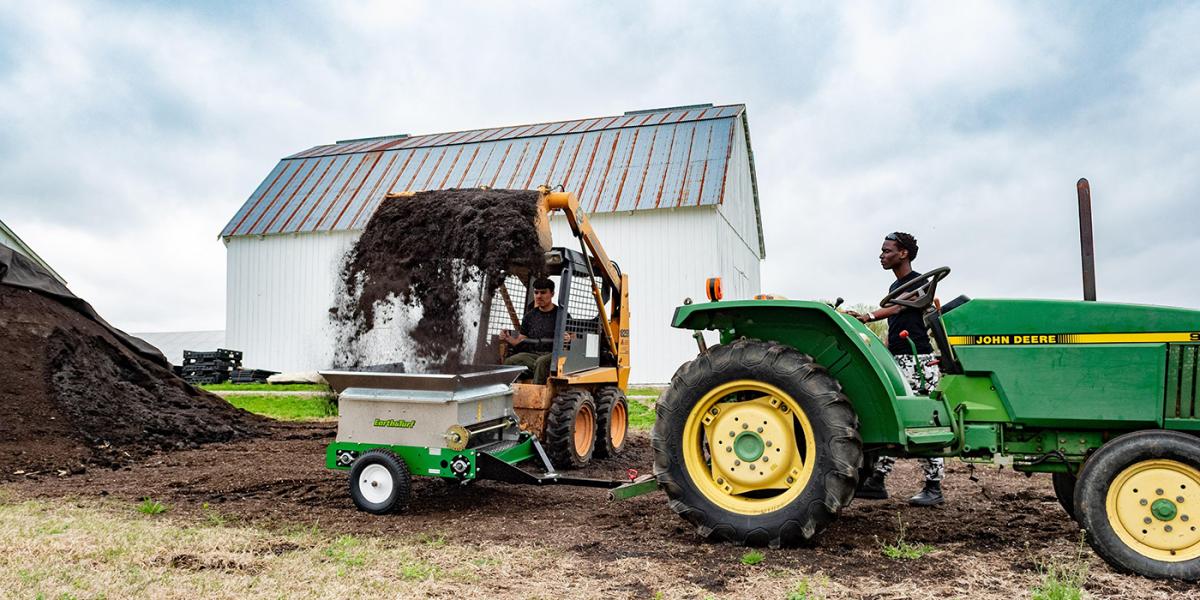
UMD’s now beloved Terp Farm, a partnership between the College of Agriculture and Natural Resources and Dining Services, began with a $124,000 Sustainability Fund grant in 2014. In the original proposal, the vision for Terp Farm was to meet 4% of Dining Services’ vegetable purchasing needs and donate 5-10% of its produce to community members facing food insecurity. Over a decade later, the project’s reach has extended well beyond its initial ambitions. Championing local food production, it has doubled in acreage since its inception and supplied over 200,000 pounds of produce between 2014 and 2024 to UMD Dining Services and the Campus Pantry. According to Guy Kilpatric, Terp Farm’s Manager, the Farm now grows in one season the equivalent of its entire first eight years of output, and is on track to double that figure again by next year.
Kilpatric, who has been involved since the Farm’s beginnings, emphasizes that its mission extends beyond crop cultivation. Terp Farm is equally committed to engaging and educating students about food systems and deepening their understanding of where their food comes from. Over the years, the grant has supported nearly 50 student workers, who gain firsthand experience with the physical demands of food production, contribute new ideas for campus engagement, and in many cases, go on to pursue careers in agriculture.
Student opportunity and local impact are similarly illustrated through the Campus Forest Carbon Project (CFCP), first implemented in 2019–2021 with ~$83,000 in grants and re-launched in 2025. The CFCP uses satellite imagery and computer modeling to monitor forest carbon levels across campus. Its broader objective is to assess how UMD’s carbon reduction efforts play into the state of Maryland’s total forest carbon, particularly significant as the campus achieved carbon neutrality in 2025. The Project has also served as a professional kickstarter. Michael Howerton, who now works at the United States Environmental Protection Agency (EPA), was a student intern during phase one. His experience with the Project directly shaped his trajectory: he pursued a Master’s degree at UMD, with his thesis a continuation of the CFCP’s research. He now describes his current role in the EPA’s Environmental Economics Office as a direct offshoot of his work on the CFCP, and said his experience with the project is what landed him the job.
Student leadership continues to define the CFCP, with Natalie Rosenthal ‘27 securing a ~$52,000 Sustainability Fund grant last year to launch CFCP 2.0, an undergraduate-led effort designed not only to expand campus carbon monitoring but also to collaborate with other universities seeking to implement similar forest carbon monitoring systems. She describes it as “rare” and “unique” for an undergraduate student like herself to receive this level of support and operate at a graduate level of research. Notably, the grant funding for this project is allocated entirely to supporting the team of paid undergraduates as they gain valuable research experience and advance university climate goals.
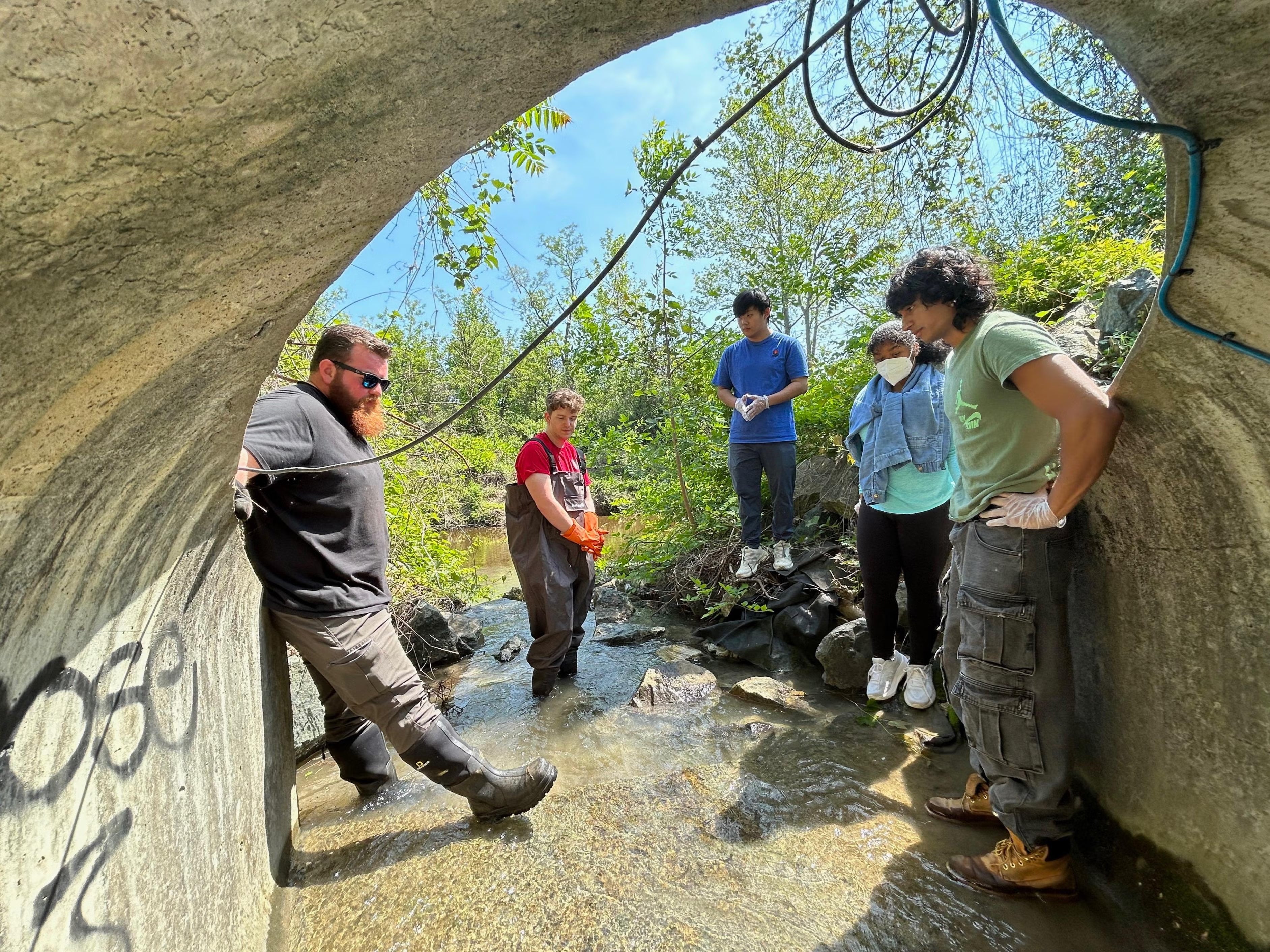
These projects represent only a fraction of the Sustainability Fund’s impact over the past 15 years. Larger projects, such as the Campus Creek Restoration, enabled the university to implement new infrastructure, remediate environmental challenges, and reduce the ecological footprint of campus operations within the broader Chesapeake Bay watershed. The three Terps Heart the Tap projects brought the water refill stations to campus, which have prevented the use of millions of single-use plastic bottles and normalized a culture of reuse. That culture is reinforced by Terp to Terp, a move-out collection program that diverts clothing, furniture, decor, and other usable items from landfills by redistributing them for free within the campus community. The Fund has also supported smaller-scale research and engagement initiatives. These include student projects in the Gemstone Honors Program on water filtration and green roof energy efficiency, niche research projects about methane emissions from cows eating cricket protein, and funding for outreach programs like Green Chapter. Collectively, projects at all scales have demonstrated how targeted investments play a role in moving the needle forward towards a lower-impact campus that is educated and engaged in sustainability.